



Quote Cart
Add products for bulk inquiry. We'll respond within 12 hours.
Your quote cart is empty.

A vehicle breakdown can happen at any time, whether you are commuting to work, driving on the highway, or traveling long distances. A flat tire, a dead battery, or poor visibility at night can quickly turn an ordinary trip into a roadside emergency.
A well-planned roadside emergency kit helps drivers prepare for common vehicle problems and improve their safety while waiting for assistance. Instead of carrying random emergency supplies, drivers can build a practical kit around four essential needs: tire emergencies, battery starting, emergency lighting, and vehicle escape.
So, what should a car emergency kit include? Here are the essential roadside emergency tools to consider.

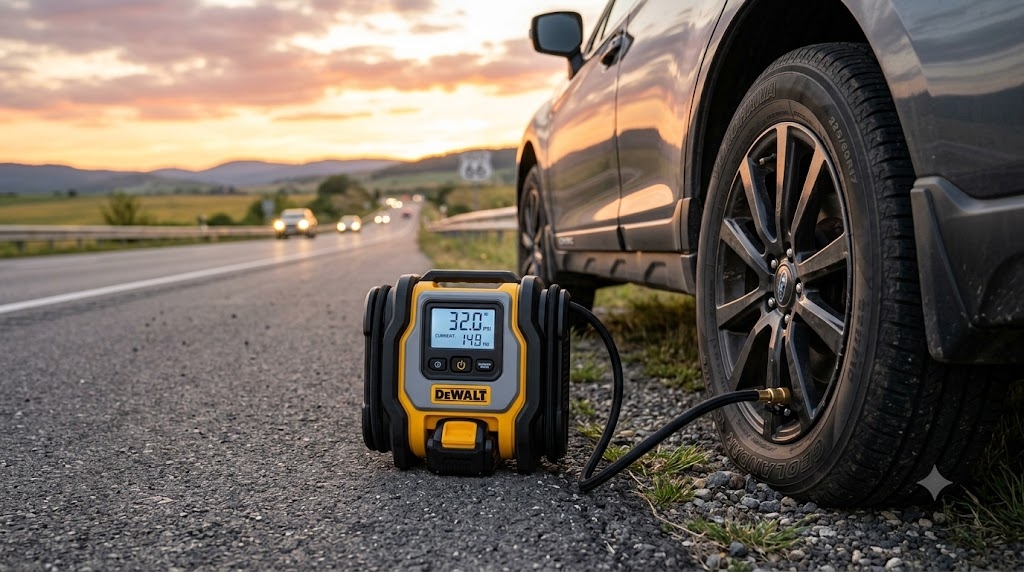
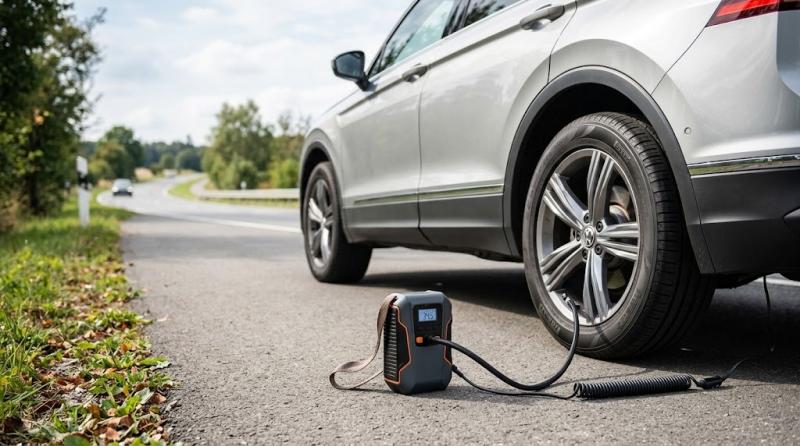
Tire problems are among the most common challenges drivers encounter on the road. Low tire pressure can affect vehicle handling, fuel efficiency, and tire performance. A portable tire inflator gives drivers a convenient way to check and restore tire pressure when conditions allow.
A portable tire inflator can help drivers:
Restore tire pressure when a tire is underinflated.
Check and adjust pressure before long-distance trips.
Handle minor tire pressure issues without immediately searching for an air station.
Keep a compact and practical emergency tool in the trunk.
When selecting a tire inflator for a vehicle emergency kit, consider its inflation capacity, power supply, portability, hose length, and ease of operation.
It is important to remember that an inflator does not repair a puncture or make a damaged tire safe to drive on. Drivers should inspect the tire and seek professional assistance when necessary.
Recommended tool: A compact, easy-to-use portable tire inflator for everyday vehicle emergencies.

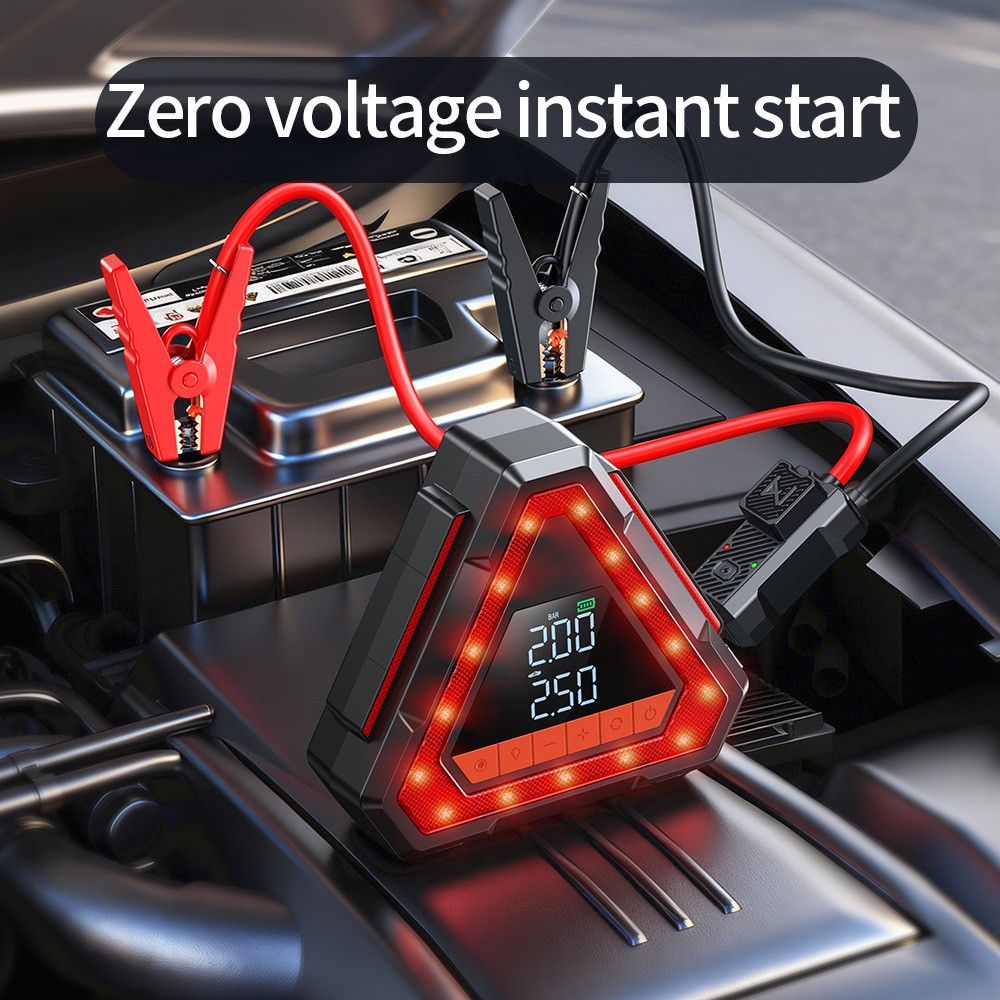
A dead battery can leave a vehicle unable to start, particularly after the lights have been left on or when the battery is aging. A portable jump starter can provide an alternative to relying on another vehicle for a jump-start.
A suitable jump starter can help drivers:
Start a compatible vehicle when its battery cannot provide sufficient starting power.
Reduce dependence on another vehicle or roadside assistance for certain battery-related problems.
Prepare for unexpected starting difficulties during daily commutes or road trips.
Keep an essential vehicle emergency tool readily accessible.
When choosing a jump starter, check its peak current, supported engine types, battery capacity, safety protections, and compatibility with the vehicle. A compact model can be especially useful for drivers who want to minimize trunk storage space.
A jump starter will not solve every starting problem. If the battery is damaged or the vehicle has an electrical or mechanical fault, professional assistance may still be required.
Recommended tool: A portable jump starter with appropriate output and built-in protection features for the intended vehicle.

Lighting is an essential part of roadside safety. A breakdown at night, in a poorly lit parking area, or during bad weather can make it difficult to inspect a tire, connect a jump starter, or locate emergency equipment.
A portable work light helps illuminate the immediate work area, allowing drivers to see what they are doing more clearly.
A work light can help drivers:
Illuminate the engine compartment during a battery-related problem.
Provide visibility when inspecting a tire or locating tools.
Support basic roadside tasks in low-light conditions.
Improve convenience during nighttime vehicle maintenance.
When selecting a work light for a car emergency kit, look for suitable brightness, reliable battery performance, convenient charging, and a durable design. Features such as a magnetic base, hook, or adjustable stand can make hands-free use easier.
For added versatility, a light with multiple brightness modes can support different tasks while helping conserve battery power when maximum brightness is unnecessary.
A work light is not a substitute for warning lights or reflective devices. Drivers should also use appropriate roadside warning equipment and avoid working in an unsafe traffic environment.
Recommended tool: A rechargeable, portable work light with hands-free mounting options.

While most roadside emergencies involve tires or batteries, drivers should also consider situations in which a vehicle occupant needs to exit quickly.
An emergency safety hammer is designed to help break suitable vehicle window glass in certain emergencies. Some models also include a seat belt cutter, providing an additional escape tool.
A vehicle safety hammer can help drivers:
Prepare for emergencies in which a vehicle door cannot be opened.
Cut an accessible seat belt with a compatible built-in cutter.
Keep an emergency escape tool within reach of the driver.
Add another layer of preparedness to a vehicle emergency kit.
When choosing a safety hammer, consider its window-breaking mechanism, seat belt cutter design, grip, durability, and mounting location.
The tool should be securely stored in an accessible position that occupants can reach while seated. Keeping it buried beneath luggage in the trunk may make it difficult to use when every second matters.
Drivers should understand how their specific tool works and follow the manufacturer's instructions. Window-breaking tools may not work on laminated automotive glass, so check compatibility and consider other emergency exit options.
Recommended tool: A compact vehicle safety hammer with an integrated seat belt cutter and an accessible mounting solution.

The most useful vehicle emergency kit is not necessarily the largest one. It is a combination of tools selected to address common problems while remaining easy to store and access.
The following table outlines a practical four-category setup.
| Emergency need | Essential tool | Main purpose |
|---|---|---|
| Tire pressure problems | Portable tire inflator | Restore appropriate tire pressure when safe |
| Battery-related starting problems | Portable jump starter | Help start a compatible vehicle |
| Low-light conditions | Rechargeable work light | Illuminate roadside tasks |
| Emergency escape | Safety hammer with seat belt cutter | Support emergency vehicle exit |
These four tools form a useful foundation for a compact car emergency kit. Depending on the vehicle, climate, driving habits, and local road conditions, drivers may also consider reflective warning triangles, a high-visibility vest, gloves, a first-aid kit, and a phone charging solution.
For drivers who prioritize compact storage, choosing portable products and organizing them in a dedicated bag can make the kit easier to store in a trunk or other suitable location.
Before every long trip, check the condition of the tools, the charge level of rechargeable devices, and the expiration dates of any consumable emergency supplies.

When building or sourcing a vehicle emergency kit, product selection should focus on usability, compatibility, and reliability rather than the number of items included.
Compact tools are easier to organize and carry. A portable tire inflator, a small jump starter, a rechargeable work light, and a safety hammer can form a practical starting point for a space-efficient kit.
Emergency situations can be stressful, particularly in darkness or bad weather. Look for straightforward controls, clear instructions, and convenient product designs.
Not every tool works with every vehicle. Check the jump starter's supported vehicle types, the inflator's specifications, and the safety hammer's compatibility with the intended window glass.
Rechargeable devices should have a suitable charging method and sufficient capacity for their intended use. Check their charge status regularly and follow the manufacturer's storage and maintenance recommendations.
For drivers, distributors, and fleet operators, product quality and appropriate safety features are important considerations. Review product specifications, testing documentation, applicable requirements, and instructions before selecting tools for a vehicle emergency kit.
Different drivers have different emergency preparedness needs.
Daily commuters: A compact car emergency kit with a tire inflator, jump starter, work light, and safety hammer can provide a practical starting point.
Long-distance travelers: Consider the four essential tools alongside additional warning equipment, a first-aid kit, and supplies appropriate for the route and climate.
Fleet operators: Standardized emergency kits can help simplify vehicle equipment management, inspections, and replacement planning.
Automotive retailers and distributors: Combining essential roadside emergency tools into a coordinated kit can create a convenient product offering for customers who want a ready-to-organize vehicle safety solution.
For businesses sourcing these products, a well-designed kit can also offer opportunities to select different configurations, storage options, and product specifications for different markets and customer requirements.
A practical roadside emergency kit should help drivers prepare for the problems they are most likely to encounter without taking up unnecessary space.
Start with four essential categories: a tire inflator for tire pressure problems, a jump starter for compatible battery-related starting issues, a work light for low-visibility tasks, and a safety hammer for emergency escape preparedness.
By selecting suitable products, checking compatibility, and keeping essential tools accessible, drivers can build a more organized and useful car emergency kit for everyday travel.
Whether you are preparing a personal vehicle, equipping a fleet, or sourcing products for distribution, focusing on these four core needs is a practical way to develop a vehicle emergency kit that prioritizes preparedness, portability, and usability.
Learn how to identify a reliable portable air pump beyond inflated PSI claims. Discover what wholesalers should evaluate before sourcing portable tire inflators for retail or private label.
Compare digital tire inflators and traditional air pumps for cars. Learn about pressure control, portability, inflation speed, digital displays, and roadside convenience.
Learn how to choose the best tire inflator for your vehicle. Compare portable, cordless, and digital tire inflators, and discover the key features that matter for safety and convenience.
Learn what to look for when choosing a portable tire inflator, including power source, inflation performance, pressure control, battery, portability and OEM options.